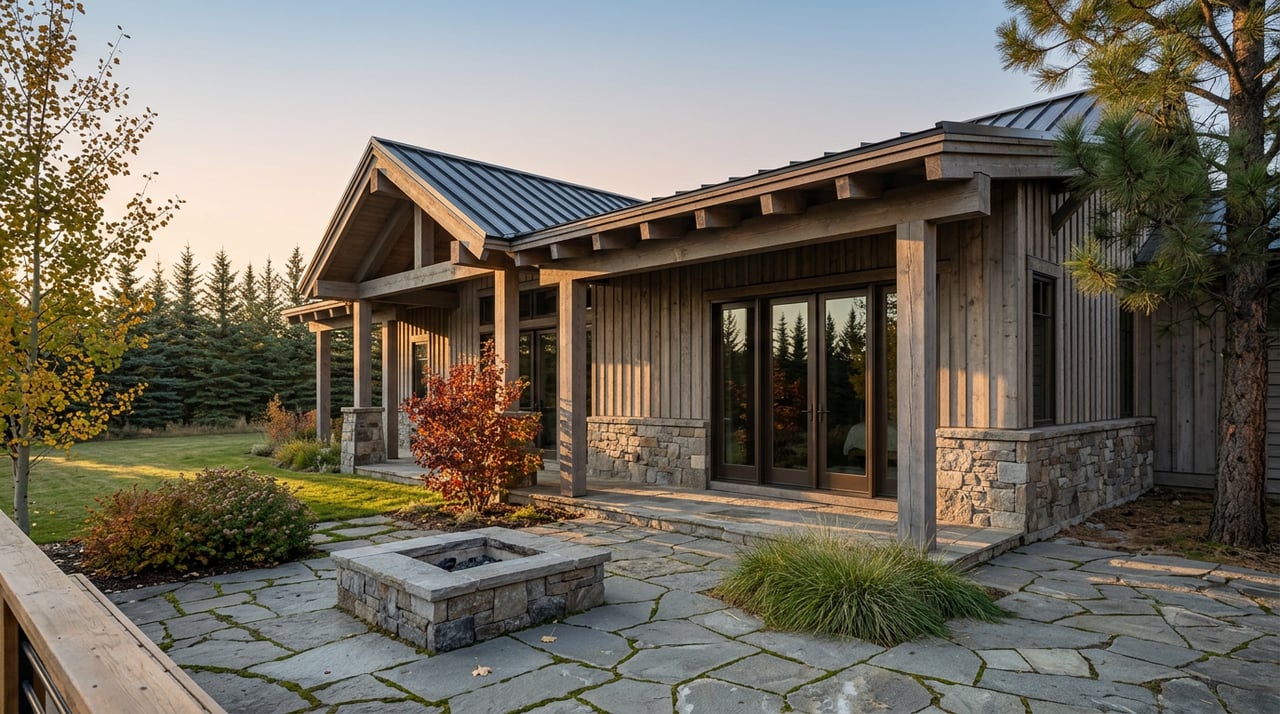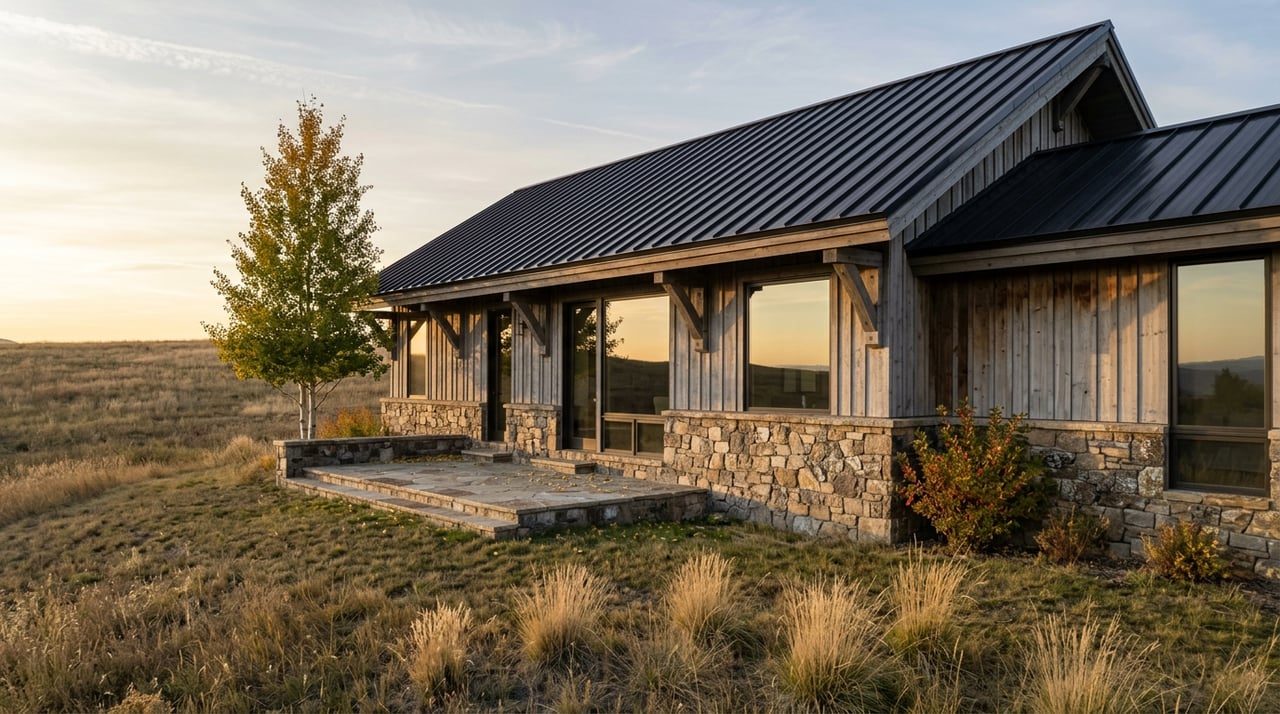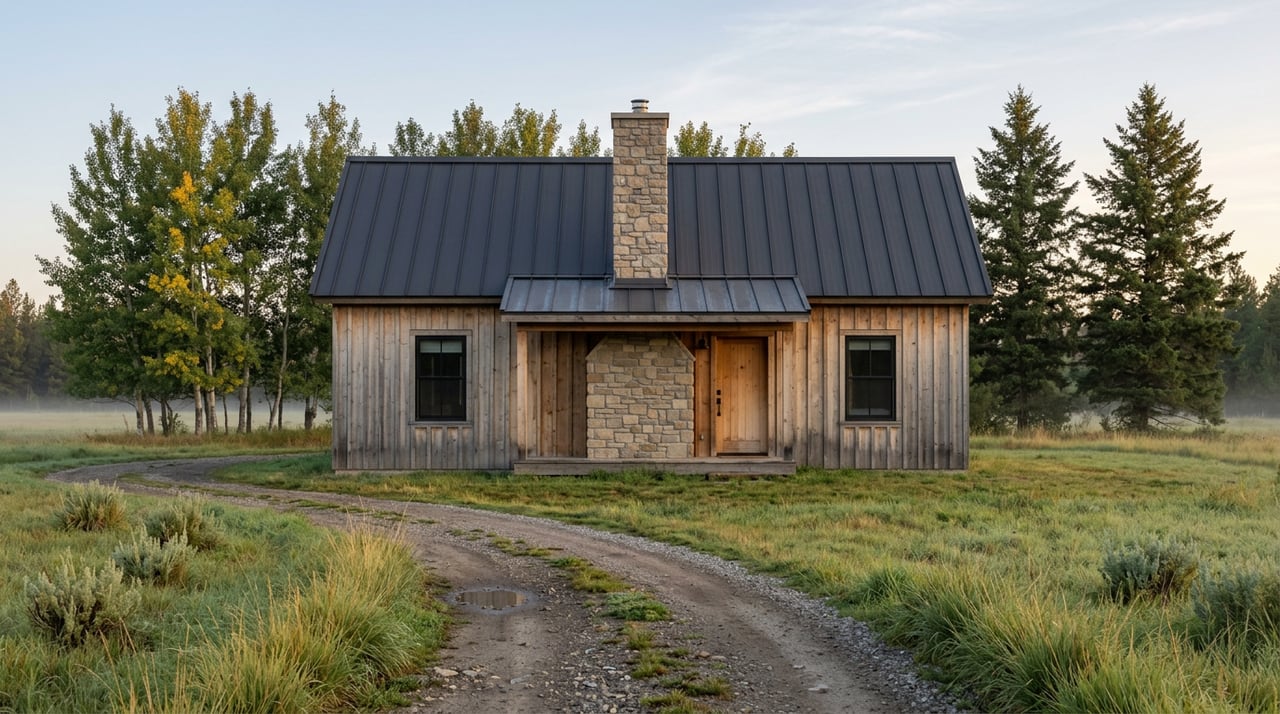
On a one-lane gravel driveway south of Whitefish, six unattended children once wandered into a pasture with a bull. The property owner had to drop what she was doing and pull them out before anyone got hurt. That single afternoon, recounted in a Flathead County courtroom, became one of the pieces of evidence that decided a case with real consequences for anyone buying a second home in this market with short-term rental income in mind.
The case is Brandt v. R&R Mountain Escapes, LLC. R&R had purchased a five-acre parcel on East Blanchard Lake Road in 2020 and started renting it out through a vacation rental platform. The subdivision's covenants, recorded back in 1990, said nothing about Airbnb or VRBO because those platforms did not exist yet. What the covenants did say was that the land was meant for "country residential living," with no commercial use of any kind. R&R had even secured a conditional use permit from Flathead County in June 2022 to operate the rental legally. The neighbors sued anyway, and in July 2025 the Montana Supreme Court sided with them, ruling that the covenants barred the short-term rental despite never using the words.
That ruling matters far beyond one gravel road. It tells you something the zoning map and the county permit never will: whether you can legally run a short-term rental on a property near Whitefish now depends on two separate documents, and either one alone can end your business plan even if the other one says yes.
The Covenant That Never Mentioned Airbnb
R&R's argument was straightforward. The covenants didn't explicitly prohibit renting the house out, didn't set a minimum stay length, and the owners had a county permit in hand. Justice Laurie McKinnon, writing for the court, rejected that reading. Taken as a whole, the declaration's restrictions on business activity, multifamily use, and commercial signage made the intent unmistakable.
We conclude that the unambiguous intent and language of the covenants was to provide for residential country living, including the ability to farm and ranch, with only single-family dwellings used for residential, and not commercial, purposes.
Chief Justice Cory Swanson's concurrence made the underlying principle even sharper. This wasn't a government body imposing new limits on private property. It was a set of restrictions the original developer wrote and every subsequent buyer, including R&R, agreed to when they closed on the land. A recorded covenant is a contract you sign by buying the property, whether or not you read it first.
The court also had to square this outcome with an earlier case, Craig Tracts v. Brown Drake, decided in 2020, where a similar "residential purpose" restriction was found too vague to block short-term rentals. The difference came down to how many restrictions worked together and how clearly they pointed toward one intent. That inconsistency is the part buyers should sit with: whether a given covenant blocks short-term rental use is not a settled statewide rule. It depends on the specific language in that specific subdivision's declaration, which means every property needs its own read, not a general assumption based on what you've heard about the market.
Zoning Says Yes. The Declaration Might Say No.
Inside Whitefish city limits, short-term rentals are only permitted in five specific zoning districts, and the city runs its own permit and inspection process on top of that. That system is well documented and reasonably easy to check.
Most of the lake and mountain properties that draw second-home buyers to this area, though, sit outside city limits in unincorporated Flathead County. Out there, a property can be zoned to allow a short-term rental, hold a valid county conditional use permit, and still be blocked entirely by a decades-old private covenant that has nothing to do with the county's rules. The Brandt case shows exactly that: the permit didn't help R&R because the covenant operates on its own, independent of what the county allows.
Before writing an offer with rental income in the pro forma, it helps to separate the three layers that actually govern use:
| Layer | Who controls it | What it tells you |
|---|---|---|
| Zoning | City or county planning department | Whether short-term rental use is permitted in that district |
| Recorded covenants | Private subdivision declaration, filed with the county | Whether the specific parcel's deed restrictions allow it, regardless of zoning |
| Tax classification | Montana Department of Revenue | How the property is taxed based on actual use, regardless of what the listing calls it |
A property can clear the first layer and still fail the second. As the next section shows, clearing both still doesn't get you out of the third.
The Tax Line That Doesn't Ask What Your Covenant Says
Montana's property tax system finished a two-year overhaul this year. Under House Bill 231 and Senate Bill 542, signed in 2025, the state now taxes property differently depending on how it's actually used, not what it's called on paper. A primary residence occupied at least seven months a year, or a long-term rental leased for 28 days or more at a time for at least seven months a year, qualifies for a tiered rate that starts at 0.76% on value up to the statewide median of roughly $378,000 and climbs to 1.90% only on value above about $1.5 million.
Second homes and short-term rentals skip the tiers entirely. They're taxed at a flat 1.90% on the full assessed value, no matter what the property is worth. On a $500,000 vacation rental, that difference can push the annual tax bill from around $7,800 under the old system to roughly $11,000 now, an increase in the 40 to 50 percent range depending on the local mill levy. That gap exists whether or not the covenants ever cared about short-term rentals in the first place. A buyer could win every covenant and zoning question and still watch the tax line eat a third of the margin they modeled.
The state built in an enrollment step that many owners miss. To get the tiered rate as a long-term rental, you have to apply, and the window isn't open year-round. The application period for the 2027 tax year runs from May 4, 2026 through March 1, 2027, so if you're closing on a property now with plans to convert it to a qualifying long-term rental, that window is open today. Miss it and the property defaults to the flat 1.90% rate for the full tax year regardless of how you actually use it.
The policy itself is also still contested. A group of current and former state lawmakers filed suit in Gallatin County District Court in January 2026, arguing SB 542 raises constitutional problems. The Montana Supreme Court declined to fast-track that case in April 2026, which means the current tax structure stays in effect while the lawsuit works its way through the district court. Nothing about that litigation should stop a buyer from underwriting a deal today, but it's worth knowing the rate you're building a pro forma around is a rate under active legal challenge, not a rate carved in stone.
What This Actually Means If You're Underwriting a Purchase
If short-term rental income is part of why a property near Whitefish makes sense on paper, a few steps matter more than a nightly rate comparison from a booking platform.
- Request the recorded declaration of covenants from the Flathead County Clerk and Recorder's office before you write an offer, not after. A zoning letter and a county permit don't tell you whether a private covenant already forbids the use, and Brandt shows a permit offers no protection against one.
- If a covenant exists, read the whole document for cumulative intent, not just for a sentence that explicitly says "no short-term rentals." Courts have now ruled both ways on similarly worded restrictions depending on how the pieces fit together.
- Model the purchase at both tax rates. Run the numbers assuming the flat 1.90% second-home rate, then again assuming you convert to a qualifying long-term lease at the tiered rate. The gap between those two numbers should be part of your offer price, not a surprise on next year's tax notice.
- If you intend to lease long-term to capture the lower rate, confirm the current enrollment window and file inside it. Missing the deadline locks in the higher rate for an entire tax year.
- Loop in someone who reads title work and tax classifications for a living before you close, not after a booking calendar is already live.
A Few Direct Questions
Does buying inside Whitefish city limits avoid the covenant problem? No. City zoning and private subdivision covenants are separate systems. A property inside city limits can still sit under a homeowners' association or subdivision declaration that restricts commercial use independent of what the city's zoning map allows.
If a covenant never mentions short-term rentals, am I in the clear? Not automatically. The Brandt decision turned on the covenants' broader restrictions on commercial activity and nuisance, not on any language specific to vacation rentals. Silence on the exact term isn't the same as permission.
Could the 2026 tax rate change again? It's possible. A constitutional challenge to SB 542 is currently in Gallatin County District Court after the state Supreme Court declined to expedite it in April 2026. Until a court rules otherwise, the flat 1.90% rate for second homes and short-term rentals remains in effect.
A second home near Whitefish can still be a strong long-term hold and a genuinely good use of capital. The buyers who come out ahead are the ones who read the declaration before the closing date, not after the first guest complaint, and who build both tax scenarios into the offer instead of the one that made the spreadsheet look best. That's the kind of groundwork West & Company walks clients through on every property, pairing two decades of transactional and legal experience with the local knowledge to know which documents to pull before you fall in love with a listing. If you're ready to underwrite a purchase properly the first time, let's Build Your Legacy together.