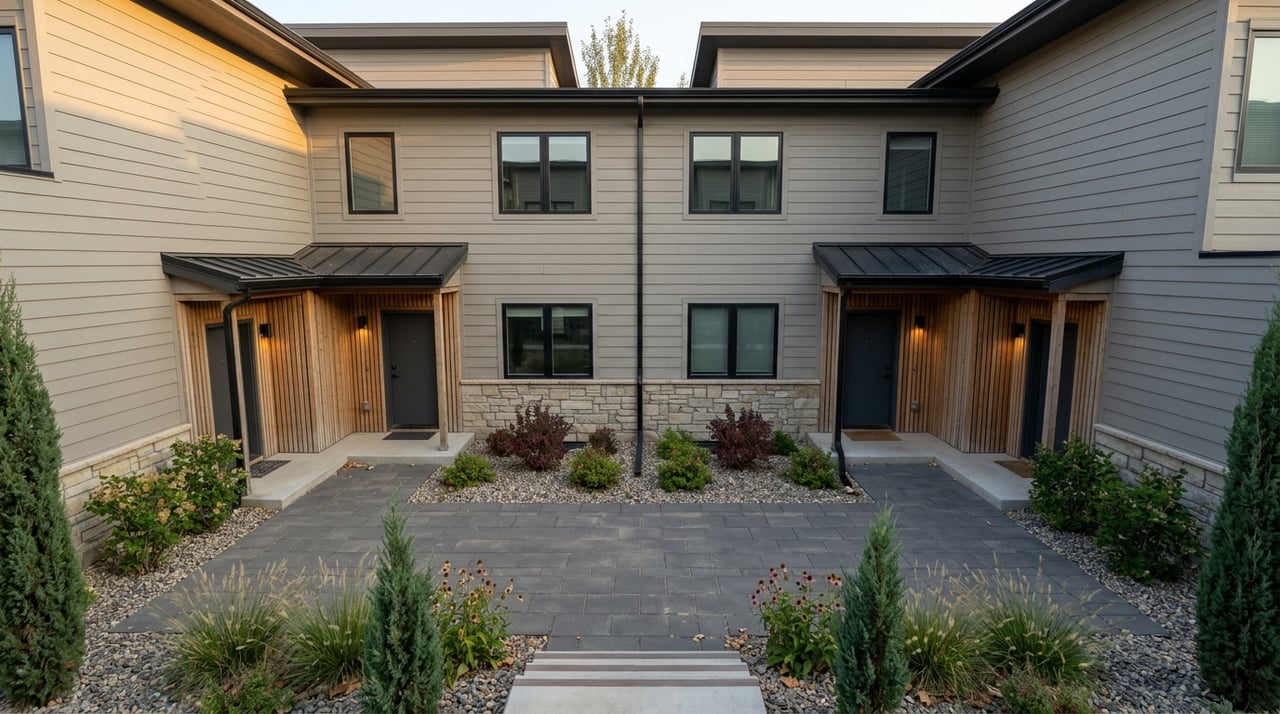
If you are looking at housing strategy in Watford City, one fact stands out right away: this is a market where workforce housing and rental flexibility matter. Between a 2024 city population estimate of 6,207, an active job base in McKenzie County, and housing patterns shaped by long-term growth, you need a plan that matches local demand and local rules. This guide will walk you through how build-to-rent and workforce housing strategies work in Watford City, what project types fit the market, and what to watch before you move forward. Let’s dive in.
Why workforce housing matters here
Watford City sits in a market where housing demand is closely tied to employment and mobility. McKenzie County reported unemployment of 3.0% in February 2026, with 248 job openings in April 2026, and mining, quarrying, and oil and gas extraction remained the largest private industry in late 2025. That combination points to a workforce that often needs housing near jobs, services, and transportation routes.
The local housing profile also supports rental-oriented planning. Census QuickFacts reports a 29.3% owner-occupied rate in Watford City and a median gross rent of $1,336 for 2020 through 2024. McKenzie County reported 7,878 housing units in 2024, a median monthly rent of $1,284, and an 18.6% rental vacancy rate.
Those numbers do not tell you that every project will succeed, but they do show why rental formats remain important in this market. They also help explain why Watford City has seen housing growth in clusters and multifamily formats rather than only in scattered single-home development.
How Watford City regulates housing types
One of the most important things to know is that Watford City does not use “build-to-rent” as a formal zoning category. Instead, the city regulates the underlying dwelling type and the zoning district where that product sits. In practical terms, your strategy has to match the form of the project to the district, site standards, and approval process.
Watford City adopted Ordinance No. 692 in January 2026, replacing Chapter XV. Under that framework, subdivisions, future land use map amendments, zoning map amendments, text amendments, conditional use permits, and variances go through the Planning Commission for recommendation and the City Council for final action.
The city also requires building inspections, and permit holders must schedule inspections 24 hours in advance. Watford City and the state have adopted the 2021 IBC, IRC, IMC, IFGC, IECC, and IEBC codes. For anyone planning a new project or assembling rental inventory, that means approvals and code readiness are central from the start.
Best districts for build-to-rent
R-3 for smaller multifamily
R-3 is Watford City’s medium-density residential district. It allows attached and detached single-family dwellings and multifamily buildings with six or fewer dwelling units. For smaller build-to-rent communities, duplex-style clusters, or compact multifamily projects, this district can be an important fit.
Its dimensional standards include a 35-foot maximum height and 2,250 square feet of lot area per unit for multifamily dwellings or attached single-family dwellings. If you are considering a modest rental project, those numbers help frame what can be built on a given site.
R-4 for larger communities
R-4 is the city’s high-density residential district. It is intended for multifamily development with more than six dwelling units, shared parking, and a site development plan before a building permit is issued. This is the district most closely aligned with larger apartment-style workforce housing communities.
R-4 allows a 60-foot height limit and requires 2,000 square feet of lot area per dwelling unit in a multifamily or attached single-family structure. If your strategy involves a more scaled rental community, R-4 is likely to be part of the conversation.
R-2M for factory-built clusters
R-2M offers a different path. The district is intended to provide flexibility for factory-built housing while preserving long-term options for site-built homes. The ordinance says this district applies only to a development parcel of ten contiguous lots or more.
The district also limits development to no more than two dwelling units on any lot, with shared driveway access and separate utility connections and metering. For assembled-lot projects or cluster-style rentals, that can create a useful framework, but only if the land configuration and utility planning work from the beginning.
Where manufactured home communities fit
Watford City’s MH district is designed for low-density manufactured home uses in a park-like setting where the owner rents or leases individual sites. This is not the same thing as a conventional apartment project, but it is part of the workforce housing landscape in this market.
The district requires at least five acres, a maximum density of eight manufactured homes per gross acre, and a minimum of 2,800 square feet per home. It also requires a 32-foot-wide private roadway and a 10-foot landscaped buffer along residential edges.
The city also requires site plans, grading and drainage plans, and ongoing inspection authority. If your strategy involves site-lease housing, this district has a clear framework, but it also comes with detailed operational and design expectations.
Temporary workforce housing has different rules
Temporary workforce housing is allowed as a conditional use, but the city treats it as a time-limited product. That distinction matters because temporary housing should not be evaluated the same way as long-term build-to-rent inventory.
Applicants must provide a unit configuration map, an anchoring description, a road and circulation schedule, applicable public health and environmental permits, a reclamation plan, and a cash-backed letter of credit for reclamation costs. In simple terms, this is a use type that requires an exit plan before it starts.
For employers, operators, or investors, that means temporary workforce housing can serve peak demand, but it should be underwritten differently than a permanent rental community. The approval path, operating horizon, and closeout requirements are all part of the strategy.
Short-term rentals are not the same thing
It can be tempting to treat short-term rentals as a workforce housing solution, but Watford City’s ordinance draws a clear line. Short-term rentals require a conditional use permit, annual renewal, a 24-hour local contact, proof of insurance, and state tax registration.
The ordinance also limits occupancy to no more than three people per bedroom, requires at least one off-street parking space per bedroom, prohibits events or large gatherings, and caps stays at no more than 30 consecutive days. That can make short-term inventory useful for transition periods, but it is not the same as stable workforce housing.
If you are planning housing for relocating workers or families, lease structure matters just as much as unit count. A product designed for bridging a move is different from one designed for long-term occupancy.
What project types already exist locally
Watford City’s housing growth has not followed a single template. The local market shows a wide range of formats, which is useful if you are comparing possible strategies.
A local employer-backed example is the McKenzie County Healthcare Systems project, a 24-unit apartment complex built as workforce housing for employees. That shows how a smaller, mission-driven project can fill a direct staffing need.
Another example is Hillside at Hunters Run Apartments, with 75 furnished units in 15 two-story buildings on 5.21 acres. That points to the role furnished, mid-sized apartment communities can play in serving workers and relocating residents.
The market also includes extended-stay formats. Watford City Basin RV Resort spans 57 developed acres and includes 784 full hook-up RV sites and 35 furnished cabins with monthly and extended-stay positioning.
At the large end of the scale, Emerald Ridge at Watford City describes a master-planned community with more than 2,000 residential units, office and retail space, parks, community facilities, an elementary school, and open space. Taken together, these examples show that local housing solutions range from employer-sponsored apartments to large mixed-use communities.
Four things to evaluate before moving ahead
Match the site to the district
In Watford City, success starts with fitting the housing type to the right district. Since build-to-rent is not a stand-alone zoning label, the project has to align with the district’s rules on unit type, density, parking, access, and site planning.
That is especially important for assembled-lot projects. The subdivision chapter states that no building permit may be issued for land conveyed in violation of the chapter, and construction cannot proceed until final subdivision plat approval by the City Council.
Confirm the approval path early
A project may need more than a building permit. Depending on the site and plan, you may need subdivision approval, a zoning map amendment, a conditional use permit, a variance, or a site development plan.
That is why early due diligence matters. A strong real estate and development strategy in Watford City starts before plans are finalized, not after.
Choose the right lease model
Lease structure should reflect the use. MH park sites are designed to be rented or leased individually, short-term rentals have a 30-day cap, and extended-stay products in the local market often focus on monthly or long-term occupancy, furnished units, laundry, and reliable utilities.
If the housing is meant for relocating workers, families, or employer-backed occupancy, the lease horizon needs to support that use clearly. A mismatch between the intended tenant and the legal use type can create problems later.
Work with partners who know the process
In this market, good partners do more than market available units. They understand the city approval process, inspection timing, code requirements, and the practical realities of housing demand tied to the oil region.
The City of Watford City Housing Authority also notes that it helps provide affordable housing options, manages housing programs, assists with rental properties, and works with other organizations. That kind of local coordination can matter when housing needs involve both private and public-sector touchpoints.
What this means for buyers and investors
If you are looking at workforce or build-to-rent opportunities in Watford City, the opportunity is real, but the details matter. This is a market where project form, duration of stay, platting strategy, and district standards all shape what works.
In broad terms, the local framework points toward a mix of R-3 and R-4 multifamily, R-2M factory-built clusters on assembled lots, MH site-lease communities, and temporary or extended-stay products for peak demand. The right approach depends on your site, your timeline, and the kind of occupancy you are trying to support.
That is where experienced local guidance can make a real difference. When you understand the code path and the market context at the same time, you can make decisions with more clarity and fewer surprises.
If you are exploring workforce housing, multi-unit property, or relocation-focused opportunities in Western North Dakota, Sandra West brings local market knowledge, transaction experience, and hands-on guidance to help you evaluate the right path.
FAQs
What does build-to-rent mean in Watford City?
- In Watford City, build-to-rent is not a separate zoning label. It generally means a rental project that must fit the underlying dwelling type and zoning district rules.
Which zoning districts support multifamily housing in Watford City?
- R-3 supports multifamily buildings with six or fewer dwelling units, while R-4 is intended for multifamily development with more than six dwelling units and requires a site development plan before a building permit is issued.
How does temporary workforce housing work in Watford City?
- Temporary workforce housing is a conditional use and is treated as a time-limited product. Applicants must provide detailed plans for layout, anchoring, circulation, permits, reclamation, and financial security for reclamation costs.
Are short-term rentals a workforce housing solution in Watford City?
- Short-term rentals can help with transition needs, but they are not the same as stable workforce housing because the city caps stays at 30 consecutive days and regulates them through a conditional use permit and annual renewal process.
What should investors review before buying land for workforce housing in Watford City?
- You should review zoning district fit, subdivision and platting requirements, site-plan obligations, utility service, parking and setback standards, and whether the intended lease model matches the city’s permitted use structure.